Industrial AI
Machine vision vs computer vision explained
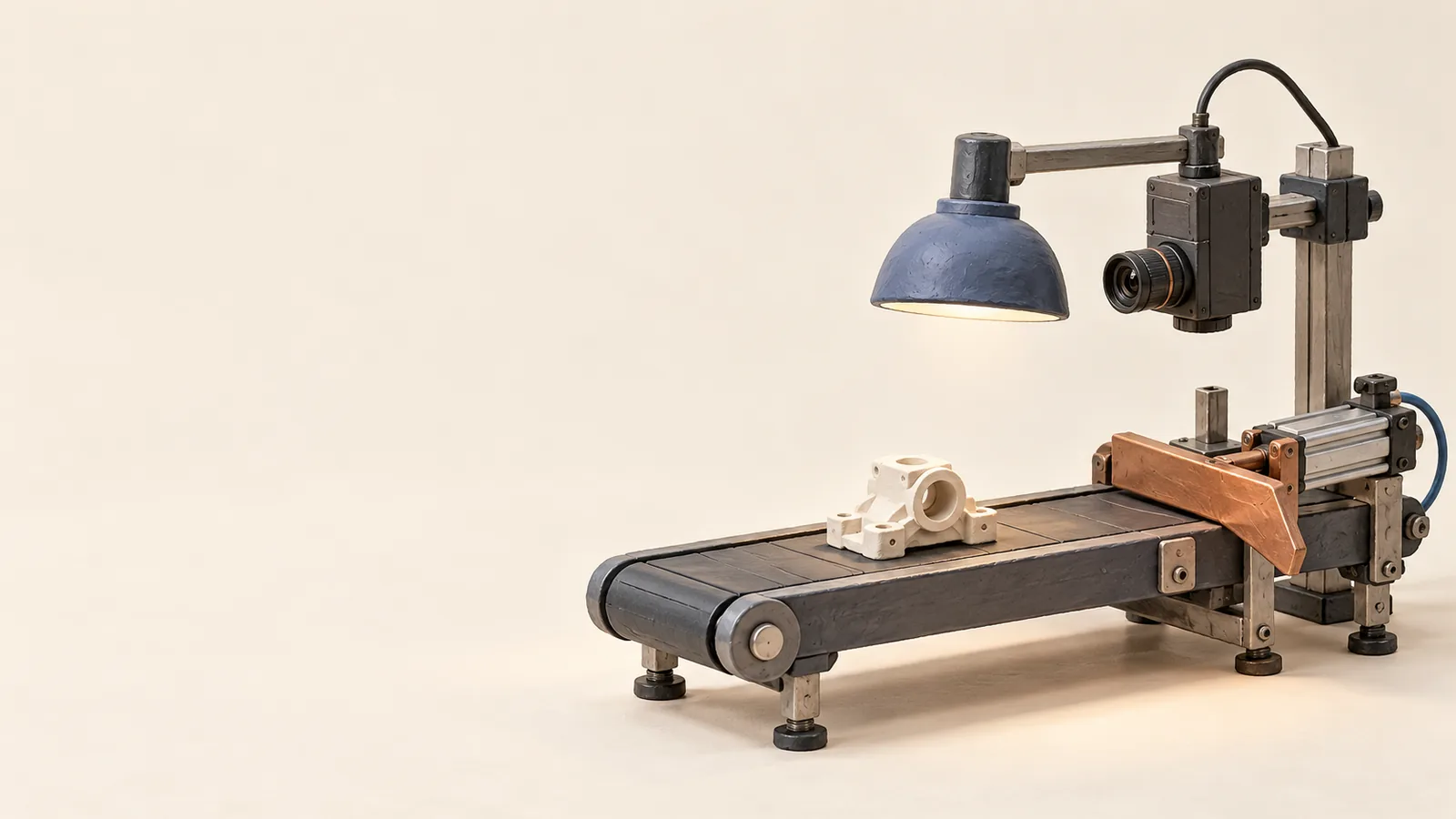
Compare machine vision and computer vision through an inspection station. See how optics, image analysis and the physical response fit together.

Computer vision extracts information from images or video. Machine vision usually describes an integrated application that uses imaging to inspect, guide or control industrial work.
The terms overlap. A machine-vision system can use computer-vision methods, including methods that do not rely on machine learning. Basler's comparison describes the industrial system's hardware and application focus alongside the wider image-analysis field.
For an inspection purchase, the distinction helps locate what the supplier is actually delivering.
Follow one part through the station
The inspection ROI Note counts defective parts caught, defective parts missed and good parts flagged. Those outcomes depend on more than the classifier.
The station must present the part, illuminate the relevant surface, capture a usable image and associate the result with the correct physical item. If the system rejects parts automatically, it must also operate the reject mechanism at the right time.
| Element | What to verify |
|---|---|
| Part presentation | The feature is visible in the intended positions and orientations |
| Lighting and optics | The image exposes the feature without hiding it in glare or shadow |
| Trigger and identity | The image and decision belong to the correct part |
| Image analysis | The method detects the required characteristic under representative conditions |
| Physical response | The correct part is held, diverted or released under the approved process |
A model test on stored images does not validate the whole sequence.
Check whether the application needs AI
Some inspection tasks use explicit image-processing rules. Others use trained models to recognise patterns that are harder to express as fixed rules. A supplier should explain which method it uses and how it behaves when the input changes.
Ask what the demonstration establishes. Reading a code, measuring a feature and classifying a surface defect are different tasks, even when all three use the same camera.
The acceptance evidence should match the requirement. A successful code read does not prove dimensional accuracy. A defect score does not prove that the diverter removes the intended item.
Measure the complete result
Retain the image, part identity, model or rule version, output and verified outcome where the process permits. Include the time taken to deliver the decision if the line has a decision deadline.
The IT/OT explanation helps separate an analytical service from the physical control it supports. Define the response to a missing or late result before testing ordinary production.
For the economics, return to the inspection business case. Its fictional pilot flags 293 parts, including 198 good ones. The cost depends on whether those flags create a review, a stop or scrap.
Write the system boundary into the acceptance plan. Test image capture, analysis, part tracking and the physical response together before describing the station as an accepted inspection system.