Continuous improvement
Muda, mura and muri: meaning and examples
Compare muda, mura and muri using LEI's transport example. See how waste, unevenness and overburden can create one another.

Muda means work that consumes resources without creating customer value. Mura means unevenness. Muri means overburden on people or equipment.
The three concepts help explain why removing one visible waste can leave another operating problem behind. LEI's explanation uses a simple transport example to show their interaction.
Move six tons with a three-ton truck
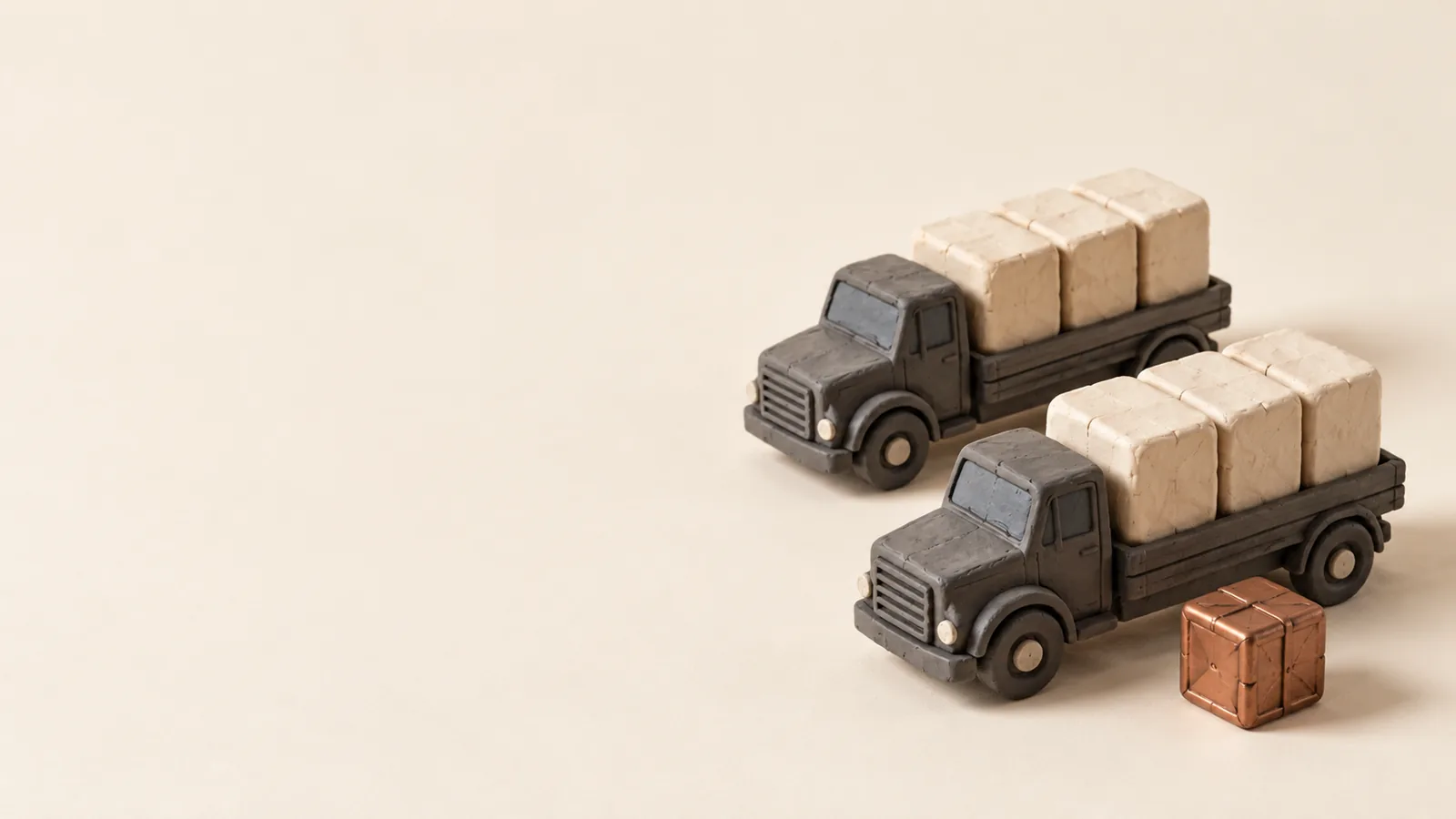
In LEI's teaching example, a company needs to deliver six tons and has a truck rated for three. The alternatives change the load and trip pattern.
| Arrangement | What it creates in the source example |
|---|---|
| One trip carrying six tons | Load exceeds rated capacity: overburden |
| Two trips carrying four and two tons | Uneven arrivals, with the first trip still overloaded |
| Three trips carrying two tons each | An avoidable extra trip under the example's stated conditions |
| Two trips carrying three tons each | Balanced loads within the stated capacity |
The second option makes two trips, just like the balanced option. That shared trip count does not reveal the overloaded first trip or uneven arrivals.
Likewise, the lowest trip count is not acceptable if it requires exceeding the equipment's capacity.
Look for the connection in the work
An uneven release pattern can create a rush followed by waiting. Overburden can contribute to failures or rework. A local attempt to remove waiting may simply push the overload into the next operation.
These are relationships to investigate in the actual process, not diagnoses that a Japanese term establishes automatically.
The eight-wastes guide explains the waste categories. The Heijunka example follows levelling through a separate production sequence.
Keep the operating requirement visible
LEI's truck illustration has deliberately few conditions. A real transport decision also needs delivery windows, loading and unloading constraints, vehicle suitability and other requirements.
Similarly, a production levelling decision needs the required output, equipment and people capacity, product sequence and permitted operating method. Dividing a total evenly does not establish that every proposed workload is feasible.
The takt and cycle-time comparison helps put required pace beside the work the station can perform.
Use the three terms during a process review to separate wasted activity, uneven loading and demands beyond capacity. Then check whether the proposed change improves all affected steps or merely moves one of those conditions elsewhere.